Brief Introduction
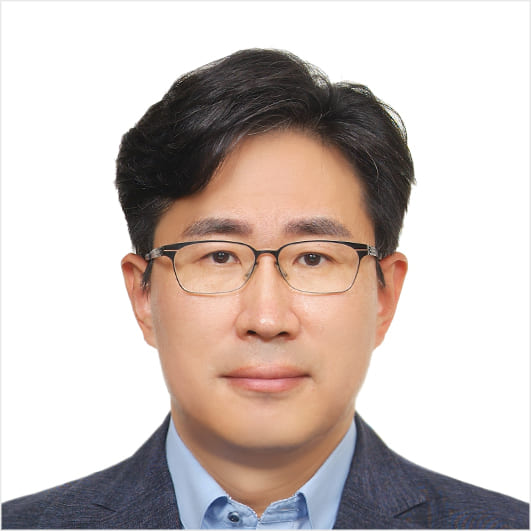
Dr. Yoo-Seok Yoon graduated from the Seoul National University College of Medicine in 1997. After that, he completed his surgical residency and fellowship training at the Seoul National University Hospital from 1998 to 2004. He is currently working as a professor in the Department of Surgery, Seoul National University Bundang Hospital. His primary clinical interests include pancreatobiliary surgery, with a special interest in minimally invasive surgery including pancreatoduodenectomy, distal pancreatectomy, and various kinds of biliary surgery. His team is actively performing minimally invasive HBP surgery and is known as one of the leading groups in this field. He has published approximately 250 articles related to HBP surgery in highly ranked international medical journals.
Specialty
Pancreatic cancer, Biliary tract cancer, Minimally invasive surgery.
Education
- 1997: M.D., Seoul National University College of Medicine
- 1997 - 2002: Intern & Resident (Surgery), Seoul National University Hospital
- 2002 - 2004: Fellowship, Hepato-pancreato-biliary Division of Surgery, Seoul National University Hospital
- 2003: Degree of Master in Medical Science, Postgraduate School, Seoul National University College of Medicine
- 2007: Degree of Ph.D. in Medical Science, Postgraduate School, Seoul National University College of Medicine
- 2011 - 2012: Research fellow in Hepato-pancreato-biliary Surgery, The Johns Hopkins Hospital, USA
Experience
- 2005 - 2011: Assistant Professor, Department of Surgery, Seoul National University Bundang Hospital
- 2012 - 2017: Associate Professor, Department of Surgery, Seoul National University Bundang Hospital
- 2022 - 2024: Chairman, Department of Surgery, Seoul National University Bundang Hospital
- 2017 - Present: Professor, Department of Surgery, Seoul National University Bundang Hospital
Selected Publications
- Lee JS, Cassese G, Yoon YS, et al. Impact of pancreatic transection level on survival outcomes and glycemic control following distal pancreatectomy for pancreatic tail cancer: A multicenter cohort study. Eur J Surg Oncol. 2026;52(3):111395.
- Park Y, Choi SB, Yoon YS, et al. Role of Minimally Invasive Reoperation for Postoperatively Diagnosed T2 Gallbladder Cancer: Multicenter Retrospective Cohort Study. J Am Coll Surg. 2025;240(3):235-244.
- Yoon YS, Lee W, Kang CM, et al. Laparoscopic versus open pancreatoduodenectomy for periampullary tumors: A randomized clinical trial. Int J Surg. 2024;110(11):7011-7019.
- Lee JS, Oh HL, Yoon YS, et al. Cost-effectiveness of open versus laparoscopic pancreatectomy: A nationwide, population-based study. Surgery. 2024;176(2):427-432.
- Park Y, Lee JS, Yoon YS, et al. Prognostic Effect of Liver Resection in Extended Cholecystectomy for T2 Gallbladder Cancer Revisited: A Retrospective Cohort Study with Propensity-Score-Matched Analysis. Ann Surg. 2023;278(6):985-993.
- Lee JS, Sohn M, Yoon YS, et al. Glucose Regulation after Partial Pancreatectomy: A Comparison of Pancreaticoduodenectomy and Distal Pancreatectomy in the Short and Long Term. Diabetes Metab J. 2023;47(5):703-714.
- Lee B, Yoon YS, Kang M, et al. Validation of the Anatomical and Biological Definitions of Borderline Resectable Pancreatic Cancer According to the 2017 International Consensus for Survival and Recurrence in Patients with Pancreatic Ductal Adenocarcinoma Undergoing Upfront Surgery. Ann Surg Oncol. 2023;30(6):3444-3454.
- Lee B, Yoon YS, Kang CM, et al. Validation of original, alternative, and updated alternative fistula risk scores after open and minimally invasive pancreatoduodenectomy in an Asian patient cohort. Surg Endosc. 2023;37(3):1822-1829.
- Lee B, Yoon YS, Kang CM, et al. Fistula risk score-adjusted comparison of postoperative pancreatic fistula following laparoscopic vs open pancreatoduodenectomy. J Hepatobiliary Pancreat Sci 2021;28(12):1089-1097.
- Kim S, Yoon YS, Han HS, et al. Evaluation of a single surgeon's learning curve of laparoscopic pancreaticoduodenectomy: risk-adjusted cumulative summation analysis. Surg Endosc. 2021;35(6):2870-2878.
Current treatment strategies for left-sided pancreatic ductal adenocarcinoma (PDAC) largely rely on principles established for pancreatic head cancer, overlooking differences in anatomy and biology. This lecture discusses how these differences should redefine the indications for neoadjuvant therapy (NAT) and the surgical extent of distal pancreatectomy.
Conventional NAT criteria focus on major vessels (SMA, celiac axis, portal vein), whereas left-sided PDAC more frequently involves splenic vessels and adjacent organs rather than major vessels. While several studies have suggested that splenic-vessel encasement and radiological adjacent organ invasion could serve as biological surrogates for worse prognosis, a recent international multicenter study (Ann Oncol 2025;36:529–542) revealed that the survival benefit of NAT in left-sided PDAC correlated with tumor size and high CA19-9 levels, not with splenic-vessel or multivisceral involvement. This indicates that patient selection for NAT must integrate tumor biology rather than relying solely on conventional vascular criteria.
A similar paradigm shift is required for surgical resection. While guidelines recommend standardized lymphadenectomy and routine splenectomy, lymphatic drainage differs substantially between the pancreatic body and tail. Body cancers spread centripetally toward central nodal stations with infrequent splenic hilar involvement, supporting selective spleen preservation. Conversely, tail cancers preferentially metastasize to splenic hilar nodes, justifying routine splenectomy but offering little benefit from extended central lymphadenectomy. Similarly, in tail cancers, a more distal pancreatic transection safely preserves parenchyma and endocrine function, as oncologic outcomes are driven by tumor biology rather than resection extent.
In conclusion, evidence supports shifting from standardized anatomy-based treatment to a location- and biology-driven strategy. Individualizing NAT indications, lymphadenectomy, transection levels, and spleen preservation according to tumor location and biologic risk will optimize the balance between oncologic radicality and functional preservation.